18 September 2012

How to stop finning, simply explained - Cos'è il finning e come fermarlo, in poche parole


We have been talking a lot about shark finning. This video by Shark Alliance explains the problem very well.

watch "Finning ban made simple".

ITA Abbiamo parlato spesso della disdicevole pratica del finning degli squali. Questo video di Shark Alliance spiega la questione molto bene, in termini estremamente semplici.

Guarda il video (manca purtroppo la versione italiana. C'è in inglese, francese, tedesco, spagnolo o portoghese)

12 September 2012

Uomini e cetacei: un difficile rapporto

E' uscito pochi giorni fa in libreria un nuovo libro di Marco Affronte:
"Jack il delfino e altre storie di mare", Editrice De Vecchi, 256 pp. 11,90 €

C’è un rapporto particolare fra gli uomini e i cetacei. L’essere umano prova verso delfini e balene un’ampia gamma di sentimenti: essi preludono a interazioni e comportamenti che possono trovarsi a due estremi veramente lontanissimi tra loro. Da una parte la baleneria, le stragi di delfini in Giappone e alle Faroe, e come non ricordare la legge italiana che, fino alla fine degli anni settanta, premiava con una ricompensa un pescatore che avesse consegnato alle autorità la coda di un delfino ucciso? All’estremo opposto ci sono un amore e un interesse verso questi animali, che molto spesso superano davvero ogni logica. In tutto il mondo crescono la domanda di poter vedere e avvicinare questi animali nel loro ambiente naturale, così come iniziative e campagne per la loro salvaguardia e tutela.
Nel libro "Jack il delfino e altre storie di mare", si racconta proprio di questo particolare rapporto fra l'uomo e i delfini (ma anche le balene), attraverso 11 storie, realmente accadute.
Si va dal leggendario Pelorus Jack, che per 25 anni ha "scortato" i traghetti attraverso il pericoloso French Pass, in Nuova Zelanda, all 'indimenticabile delfino Filippo, che ha vissuto per alcuni anni nel porto di Manfredonia. C'è la storia del cucciolo di balena grigia J.J., recuperato morente sulle coste della California, nutrito e curato per un anno intero e poi restituito con successo al mare. E ci sono le tre balene grigie intrappolate nei ghiacci dell'Alaska, che scatenano una folle corsa per restituite loro la salvezza.
Non manca nemmeno la lunga saga dell'orca Keiko, più famosa come Free Willy, ormai divenuto un simbolo del tentativo dell'uomo di riscattarsi dalle sue colpe verso i cetacei costretti alla cattività.
Altre due piccole orche, Luna e Springer, rimaste sole e sperdute nelle acque della British Columbia sono protagoniste di due storie parallele, ma dal finale drammaticamente diverso.
Ci sono anche i racconti di alcuni solitary dolphins, animali selavativi che "scelgono" di lasciare il loro gruppo per vivere a contatto con l'uomo.
Il libro si chiude con un'esperienza personale dell'autore, proprio con uno di questi delfini, nelle acque del nord Adriatico.


CSR 17 (September 3rd-9th)


The seventeenth cruise of the Cetacean Sanctuary Research project got off to a slow start due to unfavourable weather and sea conditions, constraining us to stay in the harbour the first day. Nevertheless, this time was put to good use by having various lectures about the biology and ecology of cetaceans in the Mediterranean sea. After a photo-identification lecture, our participants diligently and valiantly helped us match several sperm whale flukes with the Tethys catalogue, and found out that we have two new individuals. One of them was named “Anonymous”, after a participant suggested that hackers around the world belonging to the ‘Anonymous’ group should help cetologists create a photo-identification recognition software instead of their usual hacking practices. Here goes an appeal! On a more serious note, this anecdote illustrates just how tricky and time-consuming this simple yet multipurpose research technique can be. The other sperm whale, on the other hand, was kindly named Quentin.
Once the weather cleared up, we were able to set off for three long, beautiful, and productive days out at sea. Having reached our required 200m depth range, we deployed our hydrophone array, which instantly revealed that two sperm whales were clicking away right off of Sanremo! They were very close together and clicked in unison – practically synchronously – which made the tracking process more complicated, however we managed to collect data successfully. The following day was filled with sightings of striped dolphins, our most commonly occurring species, and a sperm whale sighting out in the pelagic area. Thursday night was spent offshore, revealing a beautifully dark star-filled sky, until the moon came out and illuminated our hazy surroundings, occasionally allowing us to glimpse striped dolphin splashes. Our acoustic sampling stations recorded during the night watch revealed a teeming sea of activity taking place under Pelagos. While participants and researchers slept, cetaceans were busy feeding and communicating!
Once the sun rose, we resumed our sighting shifts and were later delighted to have two fin whale sightings. The first one was a very small individual, leading us to think it might have been a juvenile or a calf that had been separated from the mother. The second sighting was composed of two large adults that were slowly travelling at a speed of around 2 knots, and surfacing quite close together. At the end of the day we decided to moor in the quaint little bay of Villefranche su Mer, where the participants ventured ashore for a short wandering.
The final day included a close encounter with another sperm whale, for which we took the opportunity to make an underwater video – a great end to a fantastic week!

Viridiana, Eva, Martina and Luke


Following link is for participants of this week's expedition, showing the ship's route, pictures of some of the sightings and of some moments of the cruise which were memorable (or even not so...)

Ai partecipanti al turno è dedicato uno spazio con il percorso effettuato durante la settimana, le foto di alcuni avvistamenti e qualche immagine dei momenti da ricordare - importanti e non

10 September 2012

Add your voice against shark finning - Voci contro il "finning" degli squali

"After decades of abusive and unsustainable fishing of sharks globally, it is simply unthinkable that an institution such as the European Union could abstain from implementing with extreme urgency the most basic of measures such as the one which will be voted on 19 September this year. As an European citizen I would be ashamed of anything short of full acceptance of the rule of landing sharks with fins attached, given that I would greatly prefer that sharks were not fished at all." 

                                  Giuseppe Notarbartolo, Tethys' President, in support of the final effort to protect sharks in Europe promoted by Shark Alliance

September 19th, the European Parliament will vote on a proposal to amend the EU regulation that bans shark “finning” (slicing off a shark’s fins and discarding the body at sea). Prohibiting at-sea removal of shark fins, and thereby requiring that all sharks be landed with their fins naturally attached, is the simplest, most reliable means of implementing a finning ban. An increasing number of countries agree, and so do scientists and politicians, as well as thousands of people around Europe. The statements of many of them can be found on Shark Alliances dedicated website.

To help conservationists make final push to protect sharks in Europe, please add a message of support before September 19th. Thank you.


"Dopo decenni di pesca degli squali globalmente abusiva e insostenibile, è semplicemente impensabile che un'istituzione come l'Unione Europea possa non implementare con estrema urgenza una misura basilare come quella che si voterà il prossimo 19 settembre. Come cittadino europeo mi vergognerei di qualunque cosa non sia la piena accettazione della regola che gli squali debbano essere sbarcati con le pinne attaccate - fatto salvo che preferirei di gran lunga che gli squali non fossero pescati del tutto." 
                                               Giuseppe Notarbartolo, Presidente di Tethys a supporto dello sforzo finale per proteggere gli squali in Europa promosso da Shark Alliance.

Il prossimo 19 settembre, infatti, si terrà in Commissione Pesca UE il dibattito e la votazione finale sugli emendamenti proposti per la modifica del regolamento sul finning (la pratica di tagliare le pinne agli squali, abbandonando l'animale moribondo in mare). Proibire la rimozione delle pinne in mare e quindi imporre che gli squali vengano portati a terra con le pinne è il mezzo più semplice ed affidabile per mettere al bando questa crudele pratica. Un numero sempre maggiore di Paesi, scienziati e politici appoggiano l'iniziativa, e lo stesso vale per migliaia di persone in tutta Europa. Diversi commenti si trovano sulla pagina dedicata di Shark Alliance.
Per aiutare nello sforzo finale verso la protezione degli squali in Europa, aggiungete un messaggio di supporto prima del 19 settembre. Grazie!

ulteriori notizie in italiano

04 September 2012

CSR_16 (August 28th - September 2nd)

Volunteers of CSR_16 might not have been lucky with the weather but they definitely have been with sightings! In only two days they have been able to enjoy a sighting of four sperm whales swimming together and diving almost in synchrony, and many sightings of fin whales, for a total of at least 8 different individuals. They could better understand the importance of the conservation of those animals after having encountered one with the mark of a propeller on its back, and having directly observed the big number of ships and ferries that cross the whale routes every day.
CSR_16 people had the opportunity to spend a night out at sea, experiencing night shifts but especially a fin whale sunset and a fin whale sunrise.
The days spent in the harbor were delighted by fine cuisine and lots of laughing. Half of the group enjoyed the visit of the oceanographic museum of Monaco, while the other half, particularly willing to learn and take part of the research, spent one day matching sperm whales flukes and finding an already known individual and many new ones.
Despite of the unfriendly weather, CSR 16 was definitely a week worth experiencing!

Morgana, Giulia, Chiara, Luke


Following link is for participants of this week's expedition, showing the ship's route, pictures of some of the sightings and of some moments of the cruise which were memorable (or even not so...)

Ai partecipanti al turno è dedicato uno spazio con il percorso effettuato durante la settimana, le foto di alcuni avvistamenti e qualche immagine dei  momenti da ricordare - importanti e non

26 August 2012

CSR_15 (August 20th -26th)

We have been so lucky the weather conditions allowed us to go to Corsica, staying out at sea for the whole week. CSR 15 was definitely the week of superlatives – with us having lunch in the middle of a group of feeding fin whales and meeting a sperm whale that led us to a group of four socializing animals. Together, they seemed to be braver, investigating our boat intently and letting us listen to their clicks, trumpets, codas and many other curious vocalizations. We watched them breaching in the sunset, and the only reason for us to end that stunning experience was the fading daylight.
On our way back to San Remo we realised why the route we were traveling on is called the "Fin Whale Highway": even during night navigation we could listen to the breathing of those big baleen whales in the dark that surrounded us.
No doubt this has been an extraordinary week for everybody!

Morgana, Giulia, Nina & José


Following link is for participants of this week's expedition, showing the ship's route, pictures of some of the sightings and of some moments of the cruise which were memorable (or even not so...)

Ai partecipanti al turno è dedicato uno spazio con il percorso effettuato durante la settimana, le foto di alcuni avvistamenti e qualche immagine dei  momenti da ricordare - importanti e non

23 August 2012

Vote for the mediterranean monk seal! Votate per la foca monaca del Mediterraneo


The mediterranean monk seal (Monachus monachus) is on the list of endangered species, due to loss of habitat, interaction with fisheries and deliberate killings. Only few populations survive, among which the colony of Gyaros, an uninhabited greek island in the Northern Cyclades. A project aimed at ensuring the survival of the monk seal by establishing a sanctuary on the island and by managing it in collaboration with the local stakeholders, proposed by Tethys' President Giuseppe Notarbartolo di Sciara, together with WWF Greece and the dedicated greek NGO MOm,is one of the three nominees for the La Prairie award for innovation in marine protection.
The award has been established in collaboration with the Prince Albert II of Monaco Foundation, in order to support grassroot projects aimed at resolving environmental issues: a donation of 100.000$ will go to one of the selected initiatives. The winner will be chosen by an international jury together with fans around the world via an on line voting system. 


Everyone can vote: please help the mediterranean monk seal by voting this deserving project. And if you answer the 8 questions too (on the bottom of the page, scroll down), you earn additional votes for the project. Thank you!


ITA La foca monaca del Mediterraneo (Monachus monachus) è una specie un tempo frequente nei nostri mari, ma oggi sull'orlo dell'estinzione a causa della perdita di habitat, e delle interazioni con la pesca che spesso sfociano anche in uccisioni deliberate. Oggi ne sopravvivono solo poche colonie, tra cui quella dell'isola greca disabitata di Gyaros, nelle Cicladi settentrionali. Il Presidente di Tethys Giuseppe Notarbartolo di Sciara, assieme a WWF Grecia e MOm, associazione non governativa greca), hanno presentato un progetto per un santuario sull'isola da gestire in collaborazione con le popolazioni e in armonia con gli interessi locali, ora nominato fra i tre possibili vincitori del perstigioso La Prairie award per l'innovazione nella protezione dell'ambiente marino.
Il premio, creato in collaborazione con la Fondazione Alberto II di Monaco, e dedicato a supportare progetti innovativi per la soluzione questioni ambientali, prevede una donazione di 100.000 $ al progetto considerato migliore. Il vincitore sarà decretato da una giuria internazionale, e da una votazione popolare via internet.


Chiunque quindi può votare: chi vuole sostenere la foca monaca del Mediterraneo può esprimere la preferenza per il progetto; inoltre, rispondendo anche alle 8 domande, che appaiono in fondo alla pagina (bisogna scorrere con il mouse), si ottengolo ulteriori voti. Grazie!

picture by V. Paravas/MOm

I vegetariani a Gorizia e l'insostenibilità della caccia alle balene

Cosa sappiamo oggi dei cetacei, quali sono i più minacciati nel Mediterraneo e nel mondo, e perché la caccia alle balene è insostenibile anche dal punto di vista scientifico: di questo e di altre questioni legate alla tutela del mare parlerà Maddalena Jahoda di Tethys, domenica 2 settembre prossimo, alle 16.30 a Gorizia, nell'ambito del Festival Vegetariano, giunto quest'anno la terza edizione.
La manifestazione si terrà in piazza della Vittoria, dal 31 agosto al 2 settembre e vedrà la partecipazione di nomi illustri tra cui Margherita Hack, Enzo e Patrizia Maiorca e Peter Hammarsted.
Gli interventi dedicati al mare saranno concentrati nel pomeriggio e sera di domenica.

CSR_14 (August 13th - 19th)


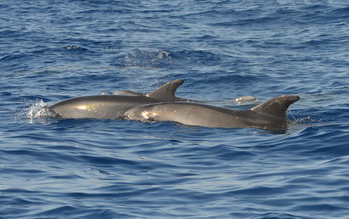
At the beginning of each week the Principal Investigator together with the captain designs a loose plan for the next days, taking into account the weather forecast and especially the sea conditions; then they evaluate the effort distribution inside the study area and the sighted species until that moment.Everything was calling for eastern routes, a Levante in the Ligurian sea vocabulary, and the lack of Risso’s dolphins and Cuvier beaked whales sightings was a good reason to go searching for those fascinating species.Within the first hour of navigation, bottlenose dolphins joined the motorsailer "Pelagos" and gifted the crew with a sighting which was one of the closest to the San Remo harbour. Together with photo-identification, also respiration patterns and a one hour sound recording were taken.A few hours later, while acoustically tracking two sperm whales, a fin whale blow appeared and the sperm whale emerged in the vicinity. Striped dolphins joined the group performing whale riding on the rostrum of the fin whale. Four species in one day… Not too bad as a start! The following days did not disappoint the expectations of the ecovolunteers, gifting every single route with more and more fin and sperm whales.Going east had become an utopia because every time we tried to do so, the sperm whales were there, right on the slope with their clicks and fluke ups, preventing us from proceeding, as each individual requires at least two hours of data collection.  Finally, on friday "Pelagos "spent a lovely night anchored at Gallinara, a tortoise shaped private island in front of Alassio. Bird colonies are the morning wake up and old mysterious buildings give a pirate allure to the landscape. The week ended with sperm whale sightings overtaking fin whales.

Francesca, Nina, Giulia and Josè


Following link is for participants of this week's expedition, showing the ship's route, pictures of some of the sightings and of some moments of the cruise which were memorable (or even not so...)

Ai partecipanti al turno è dedicato uno spazio con il percorso effettuato durante la settimana, le foto di alcuni avvistamenti e qualche immagine dei  momenti da ricordare - importanti e non


16 August 2012

Be dolphin SMART!

It is summertime and you may encounter whales or dolphins while sailing in the Mediterranean or somewhere else. But it is not always obvious how to behave when cetaceans are around. Especially dolphins seem smiling and happy, but this should not fool you. “The most common mistake most people make is that they try to touch the dolphins, swim with them, feed them or interact with them in the wrong way” says Tethys' researcher Joan Gonzalvo, recently interviewed by Lalina Fafouti on Sunday’s special supplement on Science of the greek newspaper “TO BHMA” ("The tribune").
Moreover the boat traffic has increased exponentially, especially in the Mediterranean, and so did the potential disturbance to cetaceans it generates. To avoid causing the animals unnecessary stress, threatening endangered populations, just follow a few simple rules: put your engine at the “neutral” speed and keep a distance of 50 metres, do not feed the dolphins, do not try to touch them, do not dive in to swim with them. 
These rules are summarized on the Ionian Dolphin Project's website as: be SMART

Read more on IDP's website

ITA E' estate e non è difficile avvistare qualche delfino o balena in Mediterraneo o in altri mari del mondo. Ma come comportarsi? I delfini in particolare sembrano sempre sorridenti e felici, il che però non deve trarre in inganno. "L'errore più comune, dice Joan Gonzalvo, ricercatore Tethys recentemente intervistato dal prestigioso quotidiano greco TO BHMA ("La tribuna"), è tentare di toccarli, di nuotare con gli animali, di dar loro da mangiare o comunque di interagire nella maniera sbagliata." 
Gonzalvo, che è responsabile delle ricerche sui delfini della Grecia nell'ambito del Ionian Dolphin Project (IDP) di Tethys, ha anche coniato il felice slogan "Be dolphin SMART "("sii intelligente con i delfini") dove l'acronimo, visibile nel riquadro qui sopra, sintetizza poche semplici regole, traducibili all'incirca così:
State ad almeno 50 metri di distanza dai delfini (100 dalle balene)
Muovetevi con cautela se i cetacei danno segni di essere disturbati (improvvisi cambiamenti di comportamento)
Assicuratevi che il motore sia in folle
Ricordate di non dare da mangiare, non toccare né nuotare con delfini selvatici
Trasmettete ad altri queste informazioni per essere dolphin SMART.


Leggi di più sulla pagina di IDP

10 August 2012

CSR_12 (July 30th - August 5th)


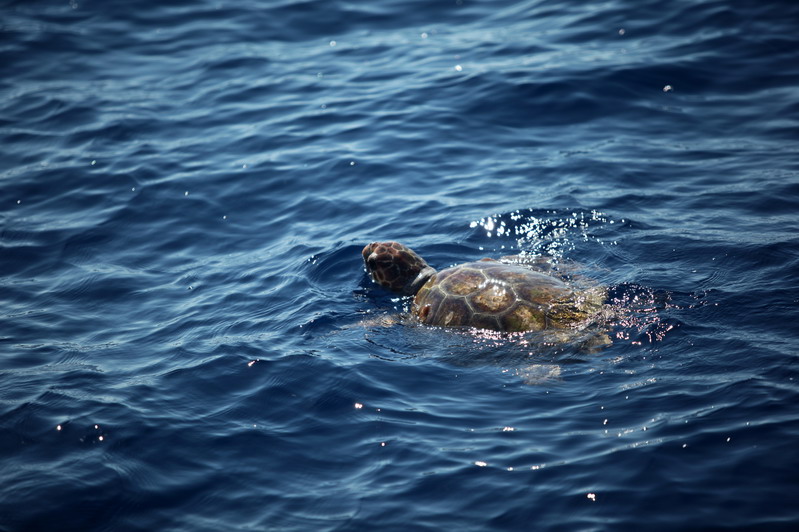
This week we were lucky to have 29 sightings in total, one of the highest totals of the season. Not only did we see many of the three most common Mediterranean species, sperm whales, fin whales and striped dolphins, but we also encountered three pods of bottlenose dolphins with their newborn calves. We even shared our sea bath with a sperm whale, listening to him click below us, and ate our dinner surrounded by six fin whales. Along with all of the cetacean sightings we also saw several loggerhead turtles and one sting-ray. The sea this week was very calm so we were able to sail to the island of Corsica where the participants and researchers enjoyed a restaurant dinner and a tour of the old castle of Calvi. After two nights there we returned to Sanremo, which involved drifting through the night, during which time we took turns to look out for ships nearby.

Elisa, Anna, Elsa and Giulia


Following link is for participants of this week's expedition, showing the ship's route, pictures of some of the sightings and of some moments of the cruise which were memorable (or even not so...)


Ai partecipanti al turno è dedicato uno spazio con il percorso effettuato durante la settimana, le foto di alcuni avvistamenti e qualche immagine dei  momenti da ricordare - importanti e non. 

Rio+20:some hope for the seas. Rio+20: qualche speranza per i mari

Some governments and NGOs were disappointed by the Rio+20 sustainable development conference which recently took place, but there may be at least some good news for the oceans.
Read the article by Susan Lieberman, director of Pew Environment Group.

Se la conferenza sulla sviluppo sostenibile Rio+20 è stata deludente, a detta di vari governi e NGO, qualche buona notizia c'è, perlomeno per gli oceani, secondo Susan Lieberman, direttore del Pew Environment Group.
Leggi l'articolo (in inglese)

09 August 2012

CSR_11 (23-29/07/2012)


Due to storms over the weekend the sea conditions at the beginning of this week prevented us from going out to sea on our first day. However, the participants and the crew enjoyed the day in Montecarlo visiting the famous oceanographic museum as well as the historical part of the town. The weather then picked up so we were able to go out to sea for the rest of the week. We had a few days of perfect sighting conditions and during this time we were fortunate enough to see a large pod of striped dolphins with two newborn calves, as well as an incredibly rare encounter with a young sperm whale who just couldn’t resist to take a closer look at the boat. During the week we spent two nights at the Lerins Islands and enjoyed a serene walk around the monastery which is still inhabited by monks.


Elisa, Brandon, Elsa and Anna


Following link is for participants of this week's expedition, showing the ship's route, pictures of some of the sightings and of some moments of the cruise which were memorable (or even not so...)

Ai partecipanti al turno è dedicato uno spazio con il percorso effettuato durante la settimana, le foto di alcuni avvistamenti e qualche immagine dei  momenti da ricordare - importanti e non. 

02 August 2012

Mediterranean fin whales probably overestimated - Forse sovrastimato il numero delle balenottere del Mediterraneo

The number of fin whales (Balaenoptera physalus) in the Mediterranean may have been overestimated by including specimens from the Atlantic that only visit, at certain times. According to a new study, published in Marine Mammal Science, the estimated 3500 mediterranean individuals may be less on the basis of acoustic data, and the population probably presents a much more limited distribution than currently described. Moreover the noise generated by human activities affects their survival.
Read more
Read the scientific publication

Il numero delle balenottere comuni (Balaenoptera physalus) del Mediterraneo potrebbe essere stato sovrastimato, includendo gli individui che a volte entrano dallo stretto di Gibilterra, ma che appartengono alla popolazione atlantica. Secondo un nuovo studio, pubblicato sulla rivista Marine Mammal Science, i 3500 individui stimati dei nostri mari potrebbero in realtà essere meno, sulla base di dati acustici, e presentare una distribuzione più limitata di quanto si credesse. Inoltre il rumore generato dalle attività umane ne mette sempre più a repentaglio la sopravvivenza.
Leggi l'articolo (in inglese)
Leggi la pubblicazione scientifica (in inglese)

01 August 2012

CSR_10 (July, 16th-22nd)


Although the weather conditions forced the crew to spend a day in the harbor by the end of the week, the tenth cruise in the waters of the Pelagos Sanctuary had a great start. More than 500 km were sailed at sea searching for marine life in the coastal and deep waters of the Ligurian Sea. Eleven cetacean sightings were recorded including striped dolphins, fin whales and a loose aggregation of at least 5 “tricky” sub-adult sperm whales. In the latter case, the animals, which were, at first, engaging in feeding activity just a few nautical miles off the Iles of Lerins, close by to Cannes, started to gather together at the surface at sunset. Unfortunately the sun disappeared behind the mountains, taking the secrets of the sea well safe in the darkness of the night. 
With the words of Sidney Buchman “If there were no mystery left to explore, life would get rather dull, wouldn't it?” resonating in the chilly air of the evening, we headed towards the coast and dropped the anchor in the bay of Cannes. It doesn’t matter how many times one can see the majesty of whales, every new sighting is like the first one ever. That’s why we are now ready and looking forward again to going out at sea, waiting for it to reveal us its secrets.  

The Tethys CSR Team, Anna, Brandon, Elsa and Nino


Following link is for participants of this week's expedition, showing the ship's route, pictures of some of the sightings and of some moments of the cruise which were memorable (or even not so...).

Ai partecipanti al turno è dedicato un link con il percorso effettuato durante la settimana, le foto di alcuni avvistamenti e qualche immagine dei momenti da ricordare - importanti e non.